While not a Luddite, I’m also not what you’d call a classic Early Adopter. I find new tech exciting but am more likely to adopt it when I have a real need. For example, I’ve begun to apply generative AI with far greater frequency to help with graphics and my consulting research.
But never in any world would I have thought to take an autonomous vehicle. What? No driver? The chaos of the road? I thought, to quote The Boss, “It’s a deathtrap, it’s a suicide rap.” The well-publicized accidents and the ongoing problems with Tesla’s Full Self-Driving (FSD) mode had not made me a fan of the technology. I’d never put my life so knowingly at risk.
We don’t have a self-driving car service in Denver (too snowy, I hear), so I’d been eyeballing the cars during my recent trip to San Francisco. Bedecked with sensors and topped with a swirling roof beacon, these strange-looking vehicles were everywhere. Then, when I needed a ride to a restaurant, a friend suggested calling me a Waymo One car on her app. Highly curious and a little more than nervous, I agreed to give it a try.
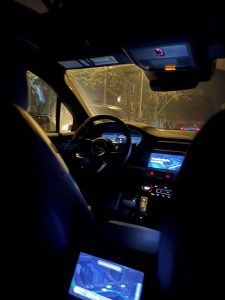 There are very few moments in my life that have completely changed my perspective. This ride was one of them. Waymo did everything right:
- On-time arrival with no cancellations and reassignments I could see
- A clean and comfortable interior (made by Jaguar)
- Welcome messages that helped orient me to the experience
- A backseat screen with a button for live support if needed
- A panel that showed what the car “saw” on its way: parked cars, moving cars, pedestrians, traffic lights, stop signs, and more
- Ambient music that put me at ease
The Waymo hummed along at Goldilocks speed, never too fast or slow. We passed through a yellow light once, but without the acceleration you’d expect with a live driver. Fifteen minutes later, I arrived safely and on time, having jettisoned my skepticism of self-driving cars somewhere back along the route.
Emboldened, I downloaded the Waymo app and called a car to take me back after dinner. The app was intuitive, pulling my Apple Pay information so that I didn’t have to struggle to enter a payment method. The ride was as comfy as before and very affordable. I didn’t have to talk, tip, or rate the driver.
Since that night, I’ve devoted some serious thought to how I was able to overcome my bias against self-driving cars. First, their omnipresence in downtown San Francisco helped normalize my impression of them. If everyone else was using them safely, why couldn’t I? Their reputation is strong, and new riders like my friend become their best promoters.
Second, as a product marketer, I’m impressed. Waymo has clearly worked to create a seamless customer journey. I felt confident in the entire experience, from the ease of requesting a ride to the smooth drive to the introductory emails. They’ve developed a strong brand (tagline: “The World’s Most Experienced Driver”) with positive associations in even the smallest of touches.
Finally, I love that the Waymo One is electric and fully powered by renewable energy. It’s better for the environment.
Some things don’t change: I remain skeptical of Teslas, and I’ll continue to use the established rideshare apps as I need them. But what is new is that I now recommend Waymo as an alternative experience to anyone who travels to a participating city (Atlanta and Miami are coming). I want others to experience the same thrill I felt, to safely break through the doubt and hesitation and leave their presumptions by the roadside.