
As my friends and family are aware, I spent the past two weeks as a willing experimental subject. With the indication of a fatty liver, my internist asked me to submit to what he calls “Food Jail,” a highly balanced but proscriptive diet that he puts his GLP-1 patients on so they can eat nutritiously even with a reduced appetite.
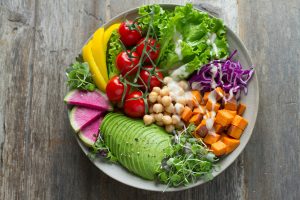
I was game to give it a try, even though I am not on a weight-loss drug. It was a tough fortnight, but I came through alive – and substantially slimmer. Note: I continued to exercise regularly, and so that was a control.
Here’s what I already knew, but confirmed:
- You eat what you have available, so make smart pantry choices
- Check labels for hidden calories
- You can never eat enough fresh veggies
- We all use way too much oil/butter when we cook
- If you cook with less salt, add more herbs
- Every stew deserves kale
- We sneak in more white flour (crackers, pita, tortillas) than we think
- There’s no need to snack with balanced meals
And here’s what I discovered:
- Meal timing is everything. I have friends who subscribe to intermittent fasting, and it always seemed excessive to me. But as I was only allowed to eat between 9 AM and 5:30 PM, I was spending far more time digesting my meals overnight and in the morning. I’m going to keep this habit, though perhaps more to 7:00 PM so I can have a social life.
- Focus on light protein, but not too much. As I weighed my fish or chicken for lunch and dinner, I could clearly see what 50 grams represented. A visual cue to calories and weights has helped me understand what a decent portion actually looks like. Many times, I eat far more protein than I need to stay healthy.
- Variety is critical. The hardest part of Food Jail was the monotony of the meals – the same salad every day and for lunch and dinner. So I played around with the presentation of the ingredients. I transformed my chicken quinoa salad into a soup with low-calorie chicken broth when I caught a summer cold. I even exchanged my breakfast bowl of grainy cereal with high-protein milk, a banana, and berries for dry cereal and a fruit smoothie. I do not recommend pulverizing the cereal, as it just makes a crunchy smoothie (blech).
- You can rewire your food habits in two weeks. By day four, I no longer found food appetizing (see #3 above about the need for variety), but I also was not ravenous first thing in the morning. My metabolism adjusted quickly, I felt less bloated, and I was less interested in the foods I couldn’t eat (breakfast burritos, pizza, dumplings, Thai noodles). What I could eat was boring, so food itself became boring. Days 5-9 were challenging at best.
So, what were my actual results?
Changing my diet and portion sizes in this way was radical, yet I was caught off guard by the impact of Food Jail. In two weeks, I lost the extra 9-11 pounds I’d been carrying around the last few years due to an ongoing medical treatment that included steroids (it ended in March).
I now weigh less than I did three years ago, and I can see a path forward to keeping it off and perhaps losing a little more over a longer period. I am very pleased with the results, and while I won’t do a diet again in the same way, I do not regret two weeks of begging off dinner invitations and being the only one nursing seltzer water at a barbecue.
Going forward, I’ll shift to a more varied Mediterranean diet (yogurt! olives! whole grains!), forgo snacks, and keep more limited eating hours. This will take willpower and good judgment, but I plan to eat the straight and narrow. Of course, I will treat myself to something off the list every so often because I will have earned it and can accommodate it. But don’t tell my doctor, as I don’t think I’d last through another round of incarceration in Food Jail.